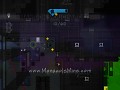
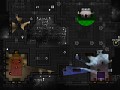
- Monaco is a heist game, like the movie Ocean’s 11.
- Play by yourself or with up to 4 people on the same screen or online.
- Each player must take advantage of their own unique character class – the Hacker can shut down the security systems while the Muscle blows a hole through the wall.
- Monaco does not yet have a release date. It will be on the PC and at least one console.
- If you want to follow development, check out the facebook and twitter pages. I update them constantly!



Articles

We've had global game jams inspired by single themes, we've seen Molyjam – a game jam inspired by the ideas of Twitter parody account Peter Molydeux, and now the Australian city of Sydney brings us Stealth Jam: the world's first stealth game jam.
Organized by Sneaky Bastards: The Stealth Gaming Blog, iFEST: The Independent Games Festival, and the Academy of Interactive Entertainment (AIE), Stealthjam will be a 48 hour game jam that runs from June 22-24.
We've had global game jams inspired by single themes, we've seen Molyjam – a game jam inspired by the ideas of Twitter parody account Peter Molydeux, and now the Australian city of Sydney brings us Stealth Jam: the world's first stealth game jam.
Organized by Sneaky Bastards: The Stealth Gaming Blog, iFEST: The Independent Games Festival, and the Academy of Interactive Entertainment (AIE), Stealthjam will be a 48 hour game jam that runs from June 22-24.
The jam will kick off in Sydney at a yet to be announced location hosted by AIE. The jam will also be taking place in Ontario, and Darmstradt, with more cities around the world to be added to the list.
The editor of Sneaky Bastards and event organizer, who is also the deputy editor of PC PowerPlay magazine, Daniel Hindes, says he got the idea for Stealth Jam when he interviewed Harvey Smith, lead designer on the original Deus Ex and co-creative director on Dishonored.
"He mentioned off-hand that a really cool way to see what the future of stealth gameplay might be would be to hold a stealth game jam, so I though: yes. I will do that," Hindes says.
"It's so obvious now that I think about it, but it's probably not something I would have thought of doing had Harvey not mentioned it.""I'D LOVE TO SEE GAMES THAT EXPLORE THE CONCEPT OF STEALTH BEYOND THE MECHANICS THAT HAVE BEEN DEFINED BY TRIPLE-A STEALTH TITLES."
The event will feature video presentations from prominent independent stealth game developers like Andy Schatz (Monaco), Nels Anderson (Mark of the Ninja), Tom Francis (Gunpoint), and Dan Silvers (Children of Liberty).
Hindes expects participants to interpret the theme broadly and come up with varied games."I'd love to see games that explore the concept of stealth beyond the mechanics that have been defined by triple-A stealth titles like Splinter Cell, Thief, and Metal Gear Solid," he says.
"As Much as I love those games, I feel like stealth as a genre has quite a lot of wiggle room that hasn't been explored because it's so easy to screw up. To me, stealth, at its core, is about using subterfuge and superior information to overcome a superior force. Taken back to those basics, there's a lot of room for stealth to grow."
Participants can pre-register for the Sydney Stealthjam by visiting the official website.

MONACO Video Review
NewsWe take an in depth look at Monaco, the all new heist game from developer Pocketwatch Games.
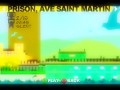
Steganography - Hiding level data in images
News 2 commentsWhat is Steganography? It's a message hidden in another message. In Monaco's case, all of the data that describes a level is hidden in the side-view image...

Indie Of The Year 2013 Editor Choice
Feature 23 commentsWelcome to the Editors Choice award for Indie of the Year 2013. Here the editors of IndieDB have their say on the most prolific indie games both released...

Editors Choice - Best Upcoming Indie
Feature 36 commentsIndie of the Year 2010 Editors Choice - Best Upcoming Indie
Post a comment
Profile
Icon

Platforms
WindowsDeveloper
Pocketwatch GamesEngine
CustomContact
Send MessageHomepage
Monacoismine.comRelease date
Game watch
Follow
Purchase

X
Tags
Embed Buttons
Link to Monaco by selecting a button and using the embed code provided more...



You may also like

Boxel Rebound
Arcade

Super Tower Rush
Arcade
Unlimited escape
Arcade

Quicker
Arcade
PsyBall
Arcade
Zombie Grinder
Arcade
Yo!
Anything happening with this game??
its on steam
Pocketwatchgames.com I think this might answer your question.
What's going on with Monaco??
hope this game did't die
Cant wait to have it =), Make a demo or somehting ^^
Ah, Monaco finally has a page here on IndieDB. It's pretty much my most anticipated game right now. I can't believe no one came up with this awesome concept before.
Someone did come up with this concept before: Take a look at Subversion by Introversion Software ( Introversion.co.uk ); they've been working on this title for 4 years now.
Awesome! And it's so cool that you worked on Whacked!, played that game so much on my xbox
This is technically awesome. Colour me impressed.