Every aspect of the Unreal Engine has been designed with ease of content creation and programming in mind, with the goal of putting as much power as possible in the hands of artists and designers to develop assets in a visual environment with minimal programmer assistance; and to give programmers a highly modular, scalable and extensible framework for building, testing, and shipping games in a wide range of genres.
Main Features
- 64-bit color High Dynamic Range rendering pipeline. The gamma-correct, linear color space renderer provides for immaculate color precision while supporting a wide range of post processing effects such as light blooms, lenticular halos, and depth-of-field.
- Support for all modern per-pixel lighting and rendering techniques including normal mapped, parameterized Phong lighting; custom artist controlled per material lighting models including anisotropic effects; virtual displacement mapping; light attenuation functions; pre-computed shadow masks; directional light maps; and pre-computed bump-granularity self-shadowing using spherical harmonic maps.
- Advanced Dynamic Shadowing. Unreal Engine 3 provides full support for four shadowing techniques:
- Dynamic stencil buffered shadow volumes supporting fully dynamic, moving light sources casting accurate shadows on all objects in the scene.
- Dynamic characters casting dynamic soft shadows on the scene using shadow buffers. Shadow buffer filtering takes samples on a jittered disc that are rotated per-pixel to detect shadow penumbras. Dynamic branching is then used to refine shadow coverage in penumbra regions.
- Ultra high quality and high performance pre-computed shadow masks allow offline processing of static light interactions, while retaining fully dynamic specular lighting and reflections.
- Directional Light Mapping enables the static shadowing and diffuse normal-mapped lighting of an unlimited number of lights to be precomputed and stored into a single set of texture maps, enabling very large light counts in high-performance scenes.
- All of the supported shadow techniques are visually compatible and may be mixed freely at the artist's discretion, and may be combined with colored attenuation functions enabling properly shadowed directional, spotlight, and projector lighting effects.
- Volumetric environmental effects including height fog.
- Full support for seamlessly interconnected indoor and outdoor environments with dynamic per-pixel lighting and shadowing supported everywhere.
- UnrealKismet, our visual scripting system:
- Gives artists and level designers virtually limitless control over how a level will play without touching a single line of code.
- By connecting together simple events and actions created by programmers, everything from simple behaviours to complete gameplay prototypes can be assembled quickly.
- UnrealKismet supports hierarchies of scripts for organizing very complex sequences into manageable units.
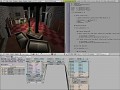
- The Unreal Editor (UnrealEd) is a pure “What You See Is What You Get” content creation tool filling the void between XSI, 3D Studio Max and Maya, and shippable game content.
- A powerful browser framework for finding, viewing, and organizing game assets of all types.
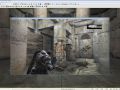
- Visual placement and editing of gameplay objects such as players, NPCs, inventory items, AI path nodes, and light sources – with a full realtime view of their appearance, including 100% dynamic shadowing.
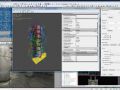
- Includes a data-driven property editing framework, allowing level designers to easily customize any game object, and programmers to expose new customizable properties to designers via script.
- Realtime terrain editing tools allowing artists to elevate terrain, paint alpha layers onto terrain to control layer blending and decoration layers, collision data, and displacement maps.
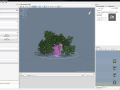
- Visual Material Editor. By visually connecting the color, alpha and coordinate outputs of textures and programmer-defined material components, artists can create materials ranging from simple layered blends to extremely complex materials and dynamically interacting with scene lights.
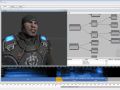
- Animation tool enables artists to import models, skeletons, and animations, and to tie them to in-game events such as sounds and script notifications.
- In-editor “Play Here” button puts gameplay just one mouse click and a fraction of a second away. Here, you can test gameplay in-editor in one window while modifying objects and rearranging geometry in another.
- Plug-ins for 3D Studio Max and Maya to bring models into the Unreal engine with mesh topology, mapping coordinates, smoothing groups, material names, skeleton structure, and skeletal animation data.
- Fully integrated source control, so that artists and level designers can check out content packages, modify, and check in from within the editor.
- All the other niceties you'd expect from a modern content editing tool: Multi-level undo/redo, drag-and-drop, copy-and-paste; customizable key and color configuration; viewport management.


Related Articles
UDK Mission Accomplished !
After we brought over the last 18 months the game back to life, please also visit our fandom page to read the guide and story - Hells-reach.fandom.com. If you then know more, we'd really appreciate it if you would support us by exploring our growing homepage - check it out at TheHauntedGames.com
Get the game here:
Store.steampowered.com
Thehauntedgames.com

Killing Floor 2 Mapping Contest Winners Announced!
Killing Floor 2After months of development and judging, Tripwire Interactive and ModDB are pleased to announce the winners of $50,000 in the Killing Floor 2 New Grounds...

2 Days Left To Enter The Killing Floor 2 New Grounds Mapping Contest
Killing Floor 2As the $50,000 contest nears its end, let’s look at the impressive entries so far

16 Days Remain To Enter The Killing Floor 2 New Grounds Mapping Contest
Killing Floor 2With $50,000 up for grabs, enter your Killing Floor 2 map to be in the running!

Games

Outlast
First Person ShooterIn the remote mountains of Colorado, horrors wait inside Mount Massive Asylum. A long-abandoned home for the mentally ill, recently re-opened by the “research...

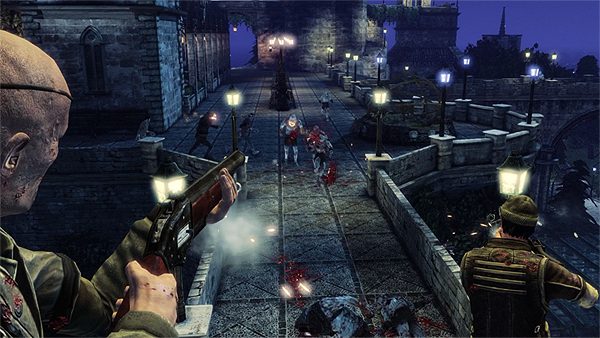
Killing Floor 2
First Person ShooterDescend into continental Europe where the outbreak caused by Horzine Biotech’s failed experiment has quickly spread and gained unstoppable momentum...

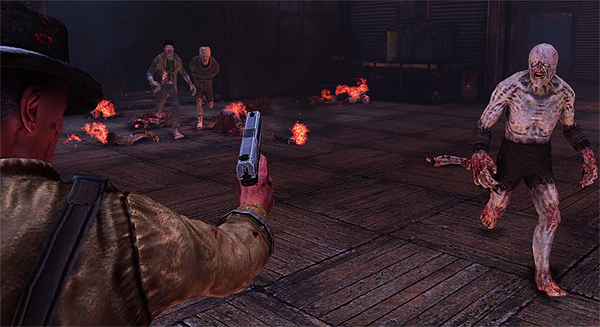
The Haunted: Hells Reach / TYA
Third Person Shooter"The Haunted: Hells Reach" (THHR) was a Something Unreal Contest winner in 2010. The current base game was last updated on 25/02/2023. THHR is a fast...

Master Arena
First Person ShooterMaster Arena closes a chapter of old school arena shooters to open a new one with a fresh gameplay more tactical and fun. Accessible to everyone, Master...

Primal Carnage: Extinction
First Person ShooterDINOSAURS ARE BACK ! Resurrected from extinction on a remote island, dinosaurs have now escaped to wreak havoc! An elite mercenary team is dropped in...

The Deadly Tower of Monsters
AdventureThe Deadly Tower of Monsters is an action-packed adventure video game for PC and PS4 inspired by Sci-Fi B-movies from 40s-70s.

Abyss Odyssey
AdventureThere are only two constants in Abyss Odyssey: a great evil awaits at the bottom of the pit, and you must succeed or die.

Zeno Clash II
First Person ShooterZeno Clash 2 is a first-person fighting video game with a deep storyline set in a punk fantasy world, available for PC, PS3 and Xbox 360.

Rock of Ages
Tower DefenseA rock-solid combination of rock-rolling action, deep strategy, and captivating art and music from different ages of history, this is a game of crush...
Native Doom - Episode One
PuzzleNative Doom is an puzzle/adventure/RPG inspired by such games as Crash, Mario and Minecraft. We have a lot of interesting stuff: The character can interact...
Post a comment
Mod SDK & Community
Built a game for Unreal Engine 3 and want to support mods? Try mod.io, a cross-platform mod SDK created by IndieDB which makes it easy to get a mod community up and running in-game. Currently seeking games to integrate and promote

X
Tags
Embed Buttons
Link to Unreal Engine 3 by selecting a button and using the embed code provided more...



You may also like


gears of war rules.the tech show in 2004 is really amazing.
WELL i AM ONE OF THOSE PEOPLE WHO TAKES APART PROGRAMS TO FIND OUT HOW TO MAKE THEM WORK BETTER i AM JUST DOWNLOADING UNREAL BETA SO i CAN DO THIS THIS IS MY OWN PROJECT IT MAY WORK OR IT MAY NOT ILL be back after I have tried it also I will be contacting BI with the results wish me luck
WHAT WOULD HAPPEN IF ARMA 3 WAS WRITTEN IN UNREAL FORMAT WOULD IT BE A HERO OR A FLOP WHAT DO YOU THINK WOULD BE THE OUT COME
Can I make my game on this engine without getting charged if I decide to sell my game?
Long live Unreal Technology!
Unreal Technology, Sure is the best of all. I love this game engine!
An awesome engine. If someone could make Half Life 2 HD Remake Mod for any FPS game of Unreal Engine 3 (like Unreal Tournament 3), then it would be awesome.
This engine better
Is this the same thing as Unreal Development Kit (UDK)
how do i download this and how much money, memory, is this also can i download to my PS3 or PC ONLY.
Speak English like humans do, or get an euthanasia needle on the vein.
You decide.