• Register

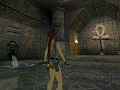
Four Keys is a short experimental game about exploration, the ways we think about physical space, and the medium specificity of video games. Version 1 released July 10th, 2012.

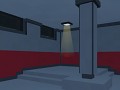
Image RSS Feed Latest Screens
FourKeys_ImgFinal03 FourKeys_ImgFinal02 FourKeys_ImgFinal01
Blog RSS Feed Report abuse Latest News: Four Keys "Postmortem"

0 comments by Mclogenog on Nov 2nd, 2012

This is my second attempt at a postmortem for Four Keys, and, unlike my first, it's more of an apology and an explanation. I realized in the first attempt, in which I clumsily addressed everything from technical complaints to art theory, that my central frustration was with subjectivity and meaning in the game. The players who commented after completing it often asked if I planned to continue development, and none offered interpretations. Enough time has passed that I now think, rather than blaming the players, it is my fault for being too subjective. To remedy this—or at least to clarify—let me explain, room by room, what I did and what it means to me.

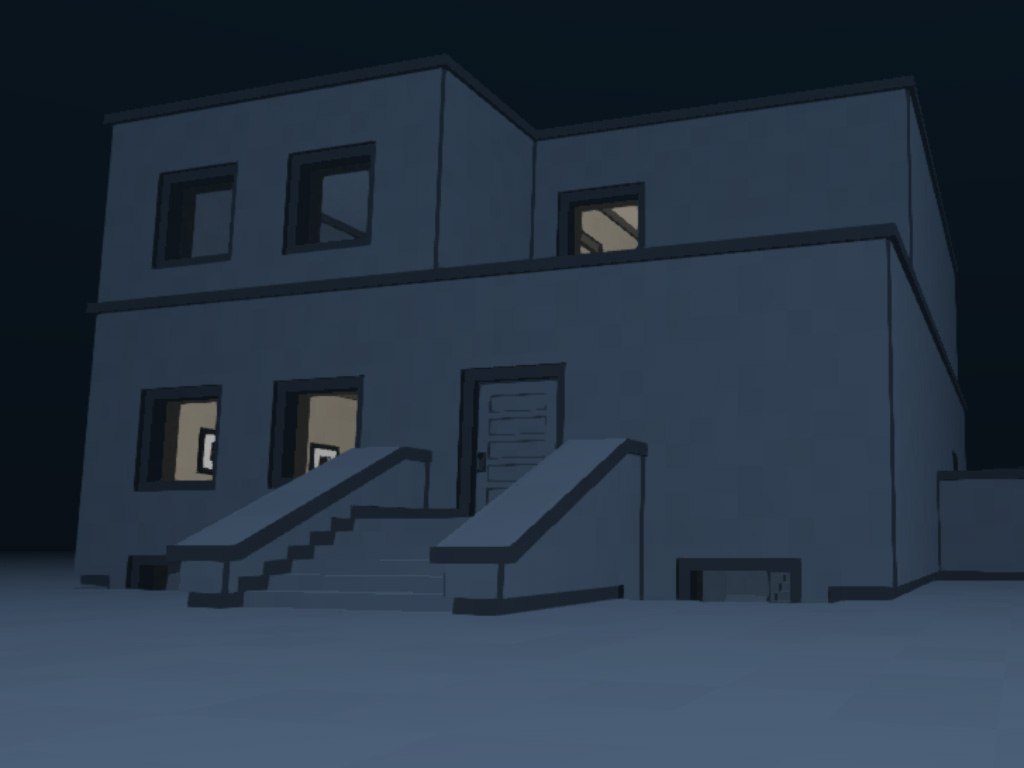
The red room is first, and it establishes reality. It conforms to the spaces identified on the ground floor, and the windows indicate a shared reality. Without this, the surprising unreality of the other rooms would have less power. The normal space also eases the mechanical learning process, introducing the idea of key collection in a safe space. There was little emotional significance to this room beyond the descent into a basement. Comparatively, this room provides necessary exposition.

The yellow room provides the first break of perceived spatial continuity. Using any of the four doors will return the player to the same yellow room. Players see this as a memory puzzle, like the lost woods, but the actual solution is to brute force the puzzle. When I played a prototype sharing this mechanic, I discovered that I was mentally mapping a space that didn't exist, a form of user-generated content. But the most interesting truth revealed through this was how easily we lie to ourselves, and ascribe agency or design to situations without them. The yellow room is about being misled by others and by oneself, and the temptation to explain through unreality.

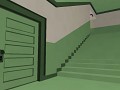
The green room is the climax of my exploration of spatial perception. Like the yellow and red rooms, the original space is feasible within the house. After the first flight of stairs, however, the player would no longer have room to ascend. Mechanically, the stairs loop forever until the player forfeits. I know of only a few examples in games where the player willingly gives up, and most are immediately transparent. Here I wanted to maintain the surprise, and the result is a joke, a space mocking the player's persistence. It's a rather sick joke, but since players tend to think it's bad design until they've given up, I'm not particularly sorry for enjoying my joke. Like the yellow room, this is about being misled, and self deception.

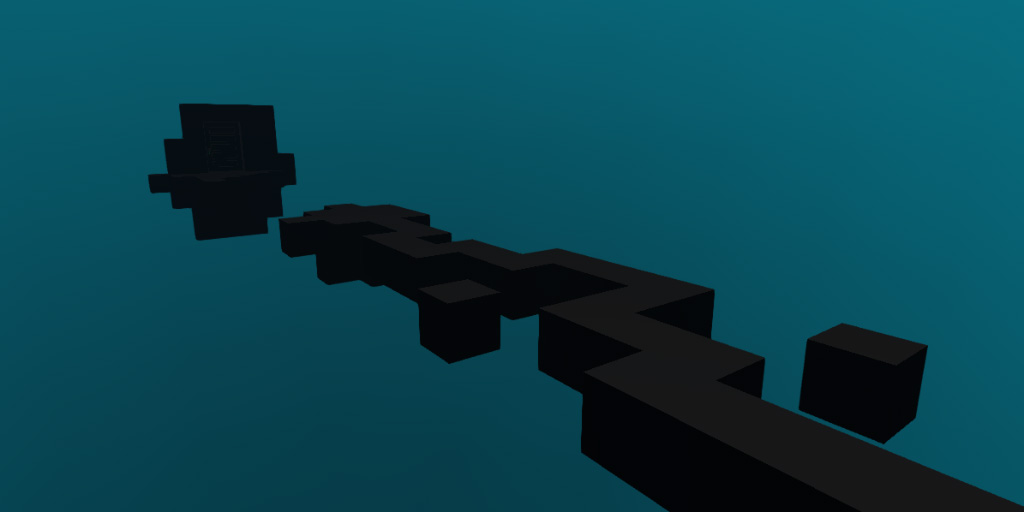
The blue room breaks the trend of spaces based in reality. The first flight of stairs of the green room, and the opening space of the yellow room are both feasible, and are only gradually revealed as impossibilities. Instead, the blue room immediately defies the space in reality it represents. The appearing and disappearing blocks represent creation and destruction, new and old. The space falls apart, and as soon as a new path is available, the old is lost.

The pink room serves as a commentary on industry practices. The white key is inaccessible. Even if the player could reach it, there is no code allowing interaction. Contrary to primary school optimism, many things are impossible. Games, so often power fantasies, seldom explore this except as horror. As the designer, I am rejecting player agency by withholding the white key. There is nothing the player can do to change this. As the designer, I have broken the player's trust; this isn't a temporary deception as it was in previous rooms. How does the player cope with impossibility?

A few years ago I felt a conflict in the beliefs I'd been taught as a child. This coincided with an anticlimactic end to a relationship, a loss of religion, and a sourceless apathy. Distinguishing absolute causes and effects here is difficult for me, but (as I can best describe it) I entered a mental desert where I could freely reevaluate myself. This last summer while designing Four Keys, I found myself in a lesser desert. Through a summer confined to a basement, I distanced myself from reality in a search of a tangible purpose and an objective definition of success. Retrospectively, the lesser deserts are self-imposed, but no less real. These feelings are central to the meaning of Four Keys. If I could explain it with words, I would, but then my attempt to explain through interactivity wasn't so successful either.

The question, then, is how can I prompt player interpretation in the future? I could blame players or games culture for being unsophisticated and anti-intellectual, but this doesn't answer the question. Since making Four Keys, I've come to consider a spectrum from subjectivity to objectivity. Subjectivity allows for diverse interpretations while objectivity is less demanding for the participant, but limits interpretation. At some point, though, subjectivity is indistinguishable from chaos. Interpretation becomes as difficult as the original creative process, and the artist cedes any meaning to the participant. Although Four Keys is hardly an abstract work, I think it's far enough in the subjective end of the spectrum to discourage players.

Maybe this answer lacks practical use, but it serves the purpose for this explanation. In the end, what I wanted from Four Keys was a shared understanding. Even though the game didn't successfully convey my thoughts, now that I've explained them, maybe I can move on to a better work.

Thanks for playing and reading,

- Andrew

Downloads RSS Feed Latest Downloads
FourKeys_Level

FourKeys_Level

Jul 14, 2012 Tutorials 0 comments

This package contains the raw level and script for Four Keys. Use as a tutorial by example. Installation instructions are included in the readme. UDK...

FourKeys_V1

FourKeys_V1

Jul 9, 2012 Full Version 3 comments

Four Keys is a short experimental game about exploration, the ways we think about physical space, and the medium specificity of video games. Version 1...

Post comment Comments
hagamablabla
hagamablabla Jul 29 2012, 2:50pm says:

Short game, but I really loved how you screwed with the player sometimes. My favorite was the green key.

+2 votes     reply to comment
The_Silver
The_Silver Jul 26 2012, 6:30am says:

Hi, how am I supposed to get the white key?

+2 votes     reply to comment
loanstar744
loanstar744 Aug 8 2012, 5:48pm replied:

Haga is right, it's an non-collectible entity, even using fly in the console and trying to collect it doesn't work, you pass right through it without grabbing it. I suspect a later update will shine some light onto it.

+2 votes     reply to comment
Mclogenog
Mclogenog Aug 9 2012, 10:29am replied:

All of the information necessary to find meaning in the white key is there ;)

+2 votes     reply to comment
hagamablabla
hagamablabla Jul 29 2012, 1:41pm replied:

You don't, I don't think.

+3 votes     reply to comment
PiotrMi
PiotrMi Jul 16 2012, 6:07am says:

Looks quite nice!

+3 votes     reply to comment
Manio31
Manio31 Jul 14 2012, 10:14pm says:

This looks really neat. I'll be putting a review up on my website shortly.

+2 votes     reply to comment
Post a Comment
click to sign in

You are not logged in, your comment will be anonymous unless you join the community today (totally free - or sign in with your social account on the right) which we encourage all contributors to do.

2000 characters limit; HTML formatting and smileys are not supported - text only

Icon
Four Keys
Platform
Windows
Developed By
Mclogenog
Contact
Send Message
Official Page
Mclogenog.wordpress.com
Release Date
Released Jul 10, 2012
Game Watch
Track this game
Share
Community Rating

Average

9

6 votes submitted.

You Say

-

Ratings closed.

Style
Genre
Adventure
Theme
Abstract
Players
Single Player
Project
Indie
Statistics
Rank
6,027 of 9,419
Last Update
10 months ago
Watchers
34 members
Files
2
News
2
Reviews
2